Key takeaways
Consensus on gold is missing. Forecasts range from sharp gains to steep corrections.
Buyers have changed. Central banks and private capital are buying together.
Bonds lost safe-haven status. Institutions are replacing bond allocations with gold.
Caution shapes capital behavior. Defensive positioning slows deals and tightens financing terms.
Record prices, record disagreement
Gold crossed $5,000 an ounce in January 2026. The rally added 67% in 2025 alone, with another 17% gain in the first weeks of this year. And yet, despite record prices, the market finds itself in an unusual position: widespread disagreement on what happens next.
Goldman Sachs targets $5,400 an ounce by year-end. Analyst forecasts range from continued gains toward $5,400 an ounce by year-end, though broader analyst forecasts range from continued gains to corrections of 10–20% if risk sentiment improves. 71% of retail investors expect prices to stay above $5,000, while institutional forecasters remain more guarded. Central banks keep buying. Private wealth is piling in. Yet no one can articulate a consensus view on whether this is a structural revaluation or a crowded trade approaching exhaustion.
That dispersion, at these levels, carries its own message.

Record prices, fractured conviction
Typically, asset rallies of this magnitude either build consensus or trigger reversals. Gold has done neither. Prices keep climbing while forecasts keep diverging.
Why the disagreement matters
In most rallies, conviction consolidates around a narrative. Bulls and bears settle into recognizable camps. Here, the camps keep shifting. Some view gold as a long-term anchor against fiscal instability. Others see a reflexive safe-haven trade that will unwind once geopolitical noise fades. Still, others worry about the momentum-driven positioning that has pushed the metal into overvalued territory.
The lack of agreement suggests something deeper: capital is cautious, fragmented, and hedging against scenarios it cannot confidently rank. That posture extends well beyond gold itself.

What has historically driven gold surges
Gold's major rallies share common features. Each coincided with monetary uncertainty, fiscal stress, or eroding confidence in fiat currencies.
The 1970s: Bretton Woods unwinds
When the US abandoned gold convertibility in 1971, gold moved from $35 to $850 by 1980. Stagflation, oil shocks, and double-digit inflation drove investors toward hard assets. The rally reflected a fundamental loss of confidence in the dollar's purchasing power.
2008–2011: Financial crisis and quantitative easing
Gold rose from roughly $870 to $1,570 as the global financial system buckled. Quantitative easing, sovereign debt fears in Europe, and near-zero interest rates made gold attractive as both a hedge and a store of value.
2020–2021: Pandemic stimulus
More than $10 trillion in global fiscal and monetary stimulus pushed gold above $2,000 for the first time. Inflation surged to 9% in the US by mid-2022. Gold served as insurance against currency debasement.
2024–2026: A structural shift
The current rally differs in one important respect. Central banks and private institutional capital are buying simultaneously. Central bank purchases now average 60 tonnes per month, compared to a pre-2022 average closer to 17 tonnes. At the same time, ETF inflows hit record levels in late 2025, and private wealth offices have materially increased allocations.
This dual demand base suggests the rally may be structural rather than cyclical. But it also raises the stakes if sentiment shifts.

What this means for governments
Gold's rise functions as a real-time referendum on sovereign debt credibility.
Fiscal space is narrowing
IMF data shows the market value of central bank gold holdings has overtaken foreign-held US Treasuries for the first time in decades. Central banks, particularly in emerging markets, are diversifying reserves away from dollar-denominated assets. The dollar's share of global reserves fell to 57% in early 2026.
US federal debt now exceeds $34 trillion. Annual interest costs are approaching $1 trillion and government debt is expected to remain structurally elevated through the decade.
The political cost of fiscal expansion
Rising gold prices signal that investors expect currencies to lose purchasing power. That makes it harder for governments to borrow cheaply, and raises the political stakes of running larger deficits. The rally, in effect, makes fiscal expansion more expensive.
What this means for investors
From tactical hedge to structural allocation
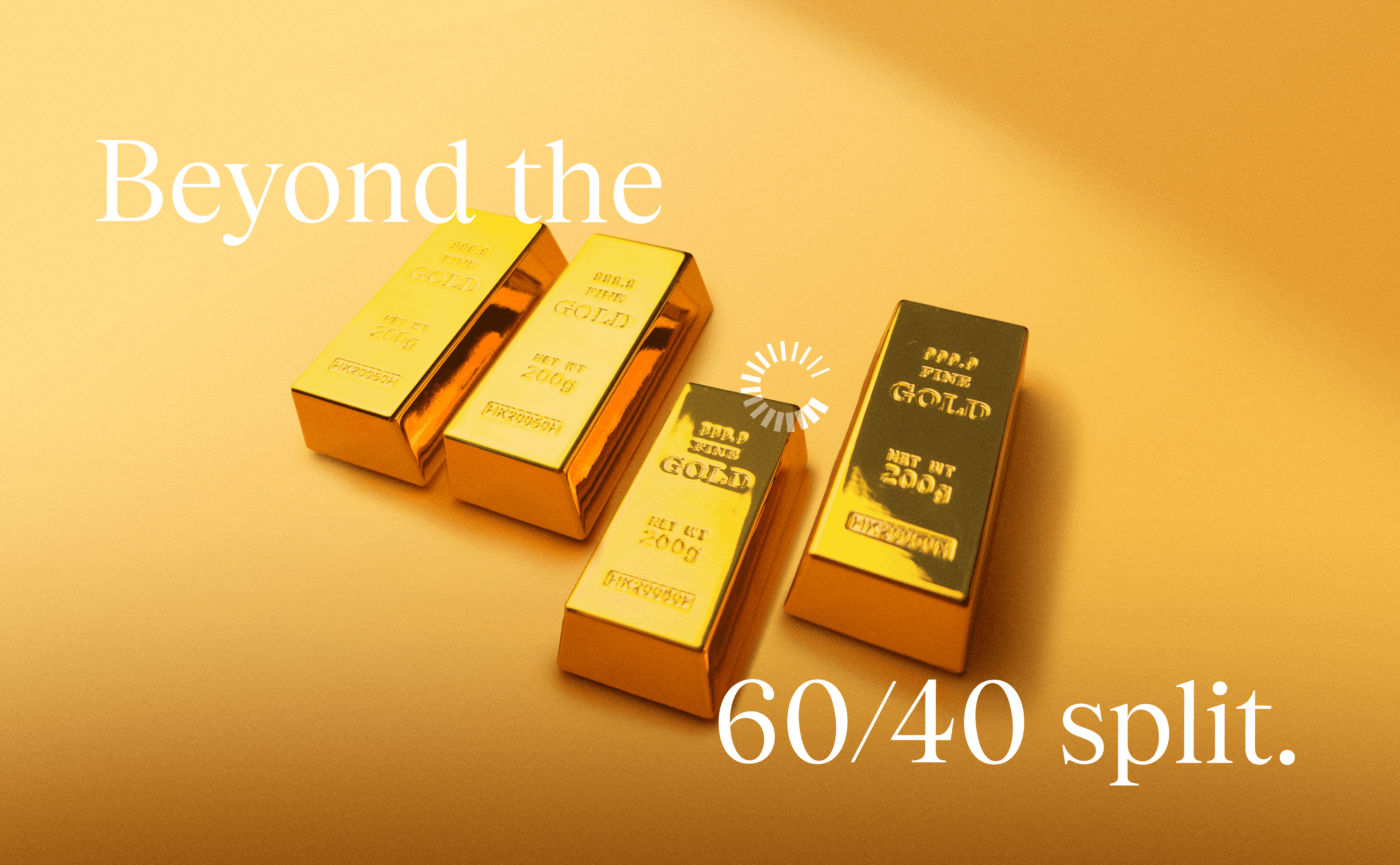
Morgan Stanley's CIO recommended shifting from a 60/40 stock-bond split to a 60/20/20 model, replacing half the bond allocation with gold. The logic: bonds have lost their traditional safe-haven status amid persistent inflation and unsustainable debt levels.
Investor behavior supports this shift. In late 2025, gold funds saw record inflows of $26 billion in a single quarter. Gold now represents 2.8% of global financial assets, nearly double its historical average.
Traditional correlations are breaking down
Gold rallied in 2025 even as the dollar remained relatively firm and real rates stayed elevated. That behavior defies conventional models, which assume gold underperforms when holding cash or bonds offers a yield advantage.
The breakdown suggests that investors are treating gold as insurance against systemic risk rather than a rate-sensitive asset. When the traditional toolkit stops working, capital reaches for something that sits outside the system entirely.
What this means for hedge funds
For funds managing tactical exposure, gold's rally creates a positioning dilemma.
The buyer base has broadened
Central banks drove the 2023–2024 rally. Private wealth firms, asset managers, and pension funds accelerated it in 2025. The shift matters because private capital tends to be more reactive to price signals and sentiment shifts.
Sticky hedges versus crowded trades
Goldman distinguishes between two types of gold positions. Some investors buy gold around specific events like elections or geopolitical flare-ups, then sell once the moment passes. Others are hedging against longer-term concerns: unsustainable government debt, questions about Fed independence, chronic fiscal deficits. Those hedges tend to stay in place.
But popularity creates its own risk. When stocks and bonds started moving together during 2022–2024, investors piled into gold as one of the few remaining diversifiers. If that correlation reverts to normal, some of those buyers may exit.
The dilemma
Hedge funds face a choice: chase momentum into a rally that shows no signs of slowing, or fade what looks increasingly like a crowded trade. Neither option comes with high conviction. That ambiguity is itself a signal.

Market reactions when gold rises
Gold's price movements ripple through asset allocation, deal timing, and financing conditions.
Short-term dynamics
Money moves defensively. Investors pull back from equities and rotate into safe havens. The dollar typically weakens, though this cycle has seen stretches where gold and the dollar rose together. Gold tends to stabilize while other assets swing more sharply.
Mid-term implications
As gold's weight in portfolios grows, institutions sell other holdings to rebalance. M&A activity often slows, since buyers want bigger discounts and sellers resist transacting at what feel like depressed valuations.
Lenders tighten terms. When safe-haven demand signals uncertainty, financing becomes more conservative: lower leverage, stricter covenants, wider spreads.
The broader effect
Gold's rise signals caution, and caution compounds. Allocators wait for clarity. Transactions slow. The cost of risk goes up.
Three scenarios to monitor
If gold keeps rising, it would signals continued erosion of trust in currencies and fiscal stability. Defensive positioning persists, deal activity remains muted, and capital stays selective.
Should gold stall at high levels, it would mean that fear persists but does not escalate. Capital remains cautious and patient, waiting for clarity before committing to risk assets.
Finally, if gold corrects sharply, that would imply restored confidence in equities, bonds, or the dollar. Faster capital rotation follows, and buyer-seller dynamics in transactions shift accordingly.
None of these scenarios commands a clear majority view today. That uncertainty, more than the price, is having a major influence on how capital moves.
Action steps for portfolio managers
Audit gold exposure. Know whether you own gold as a short-term hedge or a long-term holding, and make sure your thesis matches.
Stress-test across scenarios. Model what happens to the portfolio if gold keeps rising, stalls, or drops sharply.
Track positioning signals. Watch ETF flows, central bank purchases, and futures data for early signs of sentiment shifts.
Reassess bond allocation. Consider whether bonds still diversify the portfolio now that stocks and bonds move together more often.
Factor uncertainty into deal timing. If advising on transactions, account for cautious capital when setting valuations and exit windows.
The bottom line
The gold rally will eventually resolve. Either a consensus view takes hold, or the trade reverses. No one can predict which one it will be from here.
What matters now is recognizing that gold's signal extends beyond portfolios. When this much capital moves defensively, it changes the environment for fundraising, deals, and exits. Allocators grow more selective. Buyers demand larger discounts. Lenders tighten terms.
Treat the disagreement around gold as a leading indicator of how investors, counterparties, and capital providers will behave in the months ahead. Plan for caution to persist.