Key takeaways
A pitch deck is a decision-support tool, not a presentation. Investors read decks to filter opportunities quickly, so every slide must earn its place.
Structure reflects how investors think. A clear problem/solution/market/traction sequence aligns with real evaluation behavior.
Evidence beats ambition. Specific traction, realistic market sizing, and clear GTM signals matter more than bold claims.
Clarity reduces risk perception. Clean formatting, logical flow, and transparent assumptions help investors build confidence faster.
What investors look for in a pitch deck
Fundraising is a filtering process. Investors review a high volume of decks every month, but only a small percentage earn a second look. The question “what is in a pitch deck?” sounds simple, yet many early-stage founders, and managers still struggle with it. Most template-driven guides fail to reflect how investors actually evaluate companies.
A strong pitch deck is not just a sequence of slides. It is a structured investment narrative that demonstrates opportunity, credibility, and early momentum. In an environment where attention is limited and expectations are high, the content you include and the order in which you present it directly influence whether investors decide to engage further.
This article explains what belongs in a modern pitch deck, how investors read decks, and what each slide must accomplish.

A pitch deck is a strategic document
A pitch deck is the primary document investors rely on to understand your market, product, traction, and vision. It is not a business plan or a demo. It is a decision-support tool that helps investors qualify your startup quickly and efficiently.
A pitch deck performs two core functions in the fundraising process.
Screening: Investors skim the deck to determine whether the startup fits their stage and investment focus.
Prioritization: If the startup fits, investors assess whether the narrative is coherent, credible, and supported by early signals of traction or insight.
A strong deck reduces cognitive load. It must communicate clearly and anticipate the way investors make decisions.
Why structure matters in pitch decks
Pitch deck structure became standardized largely because investor reading patterns are consistent and time-constrained. Studies have shown that investors typically spend around 2–3 minutes on a deck in total. This leaves little room for ambiguity or meandering narratives. The structure should aim to answer these questions:
Is the problem real and meaningful?
Is the solution compelling and differentiated?
Is the opportunity large enough?
Is there evidence of traction?
Why this team and why now?
How investors actually read a pitch deck
Understanding how investors process information is essential before deciding what to include in your deck.
The 2 to 4 minute first pass
Most investors spend between 2.5 and 4 minutes on an initial review. Individual slides may receive only a few seconds of attention. This brief window can determine whether your deck advances or is rejected.
The four-slide rule
Most investors begin by scanning these slides:
Problem
Solution
Market
Traction
If these slides do not present clarity, opportunity, and early evidence, the review ends quickly.
How investors make decisions
The decision flow follows the same logic introduced earlier, but is now applied to the full evaluation process.
Screen: Does this startup match our stage and thesis?
Prioritize: Does the narrative show coherence, potential, and early validation?
Decide: Does this company warrant a meeting or additional diligence?
This sequence reflects how investors move from a quick scan to a more deliberate assessment.

The kill criteria
Investors may stop reading when they encounter any of the following:
No clearly defined problem. A deck that describes a broad inconvenience without showing who experiences it or why it matters.
Weak market signal. A market size slide that uses generic industry revenue instead of showing how much customers actually spend on the specific problem.
Poor narrative structure. A deck that introduces the product before explaining the problem, which forces investors to guess why the product exists.
Overly dense or poorly formatted slides. Slides packed with long paragraphs, multiple fonts, or inconsistent spacing, which makes scanning difficult.
Traction that does not demonstrate demand. Metrics that highlight signups without usage, pilots without active engagement, or partnerships that have not produced measurable activity.
The complete slide-by-slide breakdown
Below is the modern structure expected in a 12 to 14 slide seed-stage pitch deck. (For a version optimized for pre-seed or earlier rounds, see Building a pre-seed pitch deck.)
Cover
The cover provides orientation, not persuasion.
Include your startup name, one-line value proposition, and logo. You may add a date or contact information if it supports clarity. Keep the layout simple and professional.
Problem
The problem slide must demonstrate a real and meaningful pain point.
Explain who experiences the problem, the context in which it occurs, why it matters, and any relevant evidence that confirms its prevalence. Avoid vague language or overly technical descriptions. Investors must understand the significance immediately.
Solution
The solution slide should show how your product addresses the defined problem.
Include a clear description of the core idea, what makes your approach materially better than alternatives, and evidence that users benefit. Instead of only providing a feature list, aim to illustrate the bridge between the problem and the product.
Market (TAM, SAM, SOM)
Investors expect a grounded explanation of market size because market potential is a key indicator of upside. Clarify how many people experience the problem, what they spend today, and why the market is expanding. Use transparent assumptions. Avoid inflated or speculative sizing.
Product
Investors must understand how the product works and why it works better. Include a clean screenshot or demo view, walk through the core user workflow, and connect each step to the problem you solve. The goal is clarity without excessive detail.
Traction
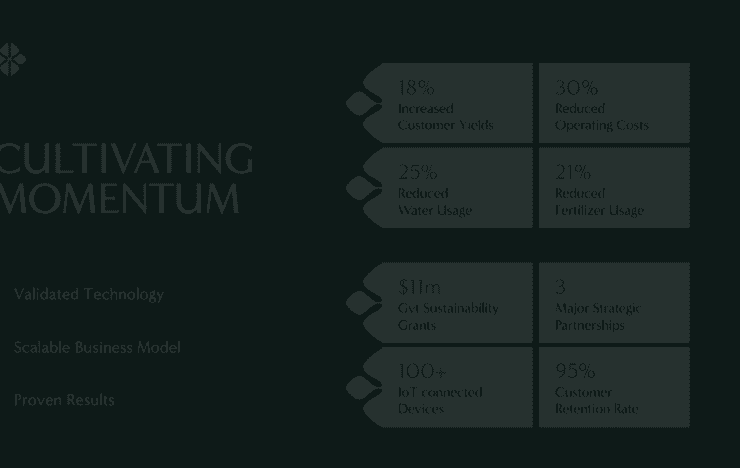
Traction is a powerful signal that investors use to prioritize opportunities. Focus on metrics that reflect genuine demand. Relevant categories include revenue growth, user growth, retention, cohort behavior, and partnerships or pilots.
Examples:
MRR grew from 12k to 38k in four months due to improvements in self-serve activation
Seventy four percent of users remain active ninety days after signup
A pilot with a top ten insurer reduced processing time by forty eight percent
SEO-acquired users convert at more than twice the rate of paid-channel users
These examples show measurable behavior, not assumptions or activity.

Business model
Explain clearly how the company earns revenue. Answer three questions:
Who pays?
How much?
How often?
Then provide a short explanation of why this model aligns with customer purchasing behavior. Make the logic easy to follow.
Go to market strategy
Your go-to-market approach shows whether you know how to acquire and convert customers.
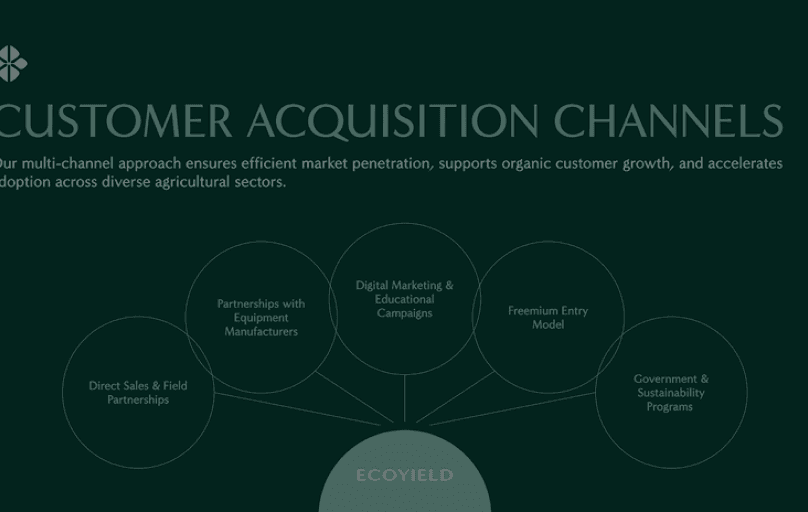
Include your primary acquisition channels, your sales motion, and early evidence that the strategy is viable.
Examples:
A free tier that produces a 12% upgrade rate within 30 days
Outbound SDR outreach with a 14% meeting rate
Content and SEO driving 40% of signups at minimal cost
A partner integration that generates 300 inbound leads per month
A channel program using certified consultants to reach enterprise buyers
Specificity strengthens credibility.
Competitive landscape
Investors expect founders to understand real alternatives, including both direct competitors and practical substitutes.
Explain what customers do today, identify emerging alternatives, clarify your differentiators, and explain why you win. Avoid suggesting that competition does not exist.
Defensibility or moat
Explain what protects your advantage as the company grows.
Common sources of defensibility include proprietary data, switching costs, network effects, unique partnerships, and technical differentiation. Describe how each element contributes to long-term advantage. Do not list terms without explanation.
Team
Investors evaluate founders with the same level of scrutiny as the product. They want to see whether your team has the knowledge, experience, and decision-making ability required to solve the problem at scale. Highlight relevant experience, founder market fit, track record, and skills that support execution. Include only what strengthens credibility, and avoid overstating accomplishments or adding unrelated achievements.
Financials and forecast logic
Financial projections at seed stage should be directional and grounded in reasonable assumptions rather than precise predictions. Explain your revenue logic, margin expectations, cost structure, and key assumptions such as retention, conversion, or sales cycle length. Investors assess whether your reasoning reflects a realistic understanding of how the business grows, not whether the numbers are exact.
Ask and use of funds
Clearly state the amount you are raising, how long the capital will last, and the milestones it will enable. Outline how the funds will be allocated across product, hiring, or GTM efforts, and explain how each allocation reduces risk or accelerates value creation. Investors want to understand the connection between capital and measurable progress.
Example:
You are raising $2.8M to fund 18 months of runway and reach three milestones:
launch our automated compliance module,
grow from $300k to $1.5M ARR, and
reduce onboarding time from 14 days to under 48 hours.
Use of funds
50% Product & engineering
Hire two full-stack engineers and one data engineer to complete the compliance module and improve platform scalability.
Impact: De-risks enterprise expansion and unlocks larger contract sizes.30% Go-to-market
Add one account executive and invest in targeted lead generation for healthcare and fintech verticals.
Impact: Accelerates ARR growth and validates a repeatable sales motion ahead of Series A.20% Customer success & Support
Add a customer success manager to reduce churn and shorten onboarding time.
Impact: Strengthens retention, improves NDR, and enhances unit economics.
Vision and closing
End with a clear and credible statement about why the opportunity matters and why your team is positioned to win in this specific market. Explain why now is the right moment for the solution and what the company could become at scale, based on reasonable assumptions and projections. Use a strong close to reinforce conviction and leave your investors with a compelling sense of momentum and purpose.

4 common pitch deck mistakes to avoid
When a pitch deck lacks strong market grounding, investors may view the startup as too risky. Data from CB Insights shows that the most-cited cause of startup failure is lack of market demand (“no market need”).
1. Presenting claims without evidence
Investors expect proof for statements about demand, efficiency gains, market behavior, or user outcomes. Unsupported claims reduce trust and make it harder for investors to assess whether traction or insight is real.
Example: Saying “users love the product” without usage metrics or retention data offers no meaningful information.
2. Inflating market size
Large, speculative markets that rely on broad industry numbers weaken credibility. Investors prefer a realistic, well-reasoned market size that reflects how much customers actually spend to solve the specific problem you address.
Example: Using the entire healthcare industry as your TAM when your product addresses a narrow workflow makes the estimate unrealistic.
3. Weak competitive analysis
Minimizing or ignoring competition signals limited understanding of the market. Investors want to see that you recognize what customers use today, what alternatives exist, and where your product fits.
Example: A slide claiming that competitors are irrelevant or outdated suggests a lack of research rather than a real advantage.
4. Missing essential slides
If traction, go-to-market strategy, use of funds, or financial logic are missing, the deck feels incomplete and becomes harder to evaluate. Investors need these sections to understand progress, scalability, and the purpose of the raise.
Example: A deck without a GTM slide forces investors to guess how customers discover the product, which increases uncertainty and slows decision making.
What to include in your pitch deck
All core slides
Clear problem to solution to traction sequence
Credible market sizing
Specific and meaningful traction
Realistic and focused GTM
Competitive landscape with real alternatives
Ask tied to milestones
Clean PDF export
Visual hierarchy that supports scanning
If you’re unsure how to prepare a pitch deck or you’re considering hiring a design partner to support the process, How to choose the right pitch deck design agency offers practical guidance.
Bottom line
A pitch deck is an investor evaluation tool. Every slide must earn its place, and every claim must be supportable. The startups that succeed in fundraising communicate clearly, reduce ambiguity, and present evidence that the market cares about what they are building. Clarity and structure helps create connection with how your investors think, evaluate risk, and choose opportunities.